
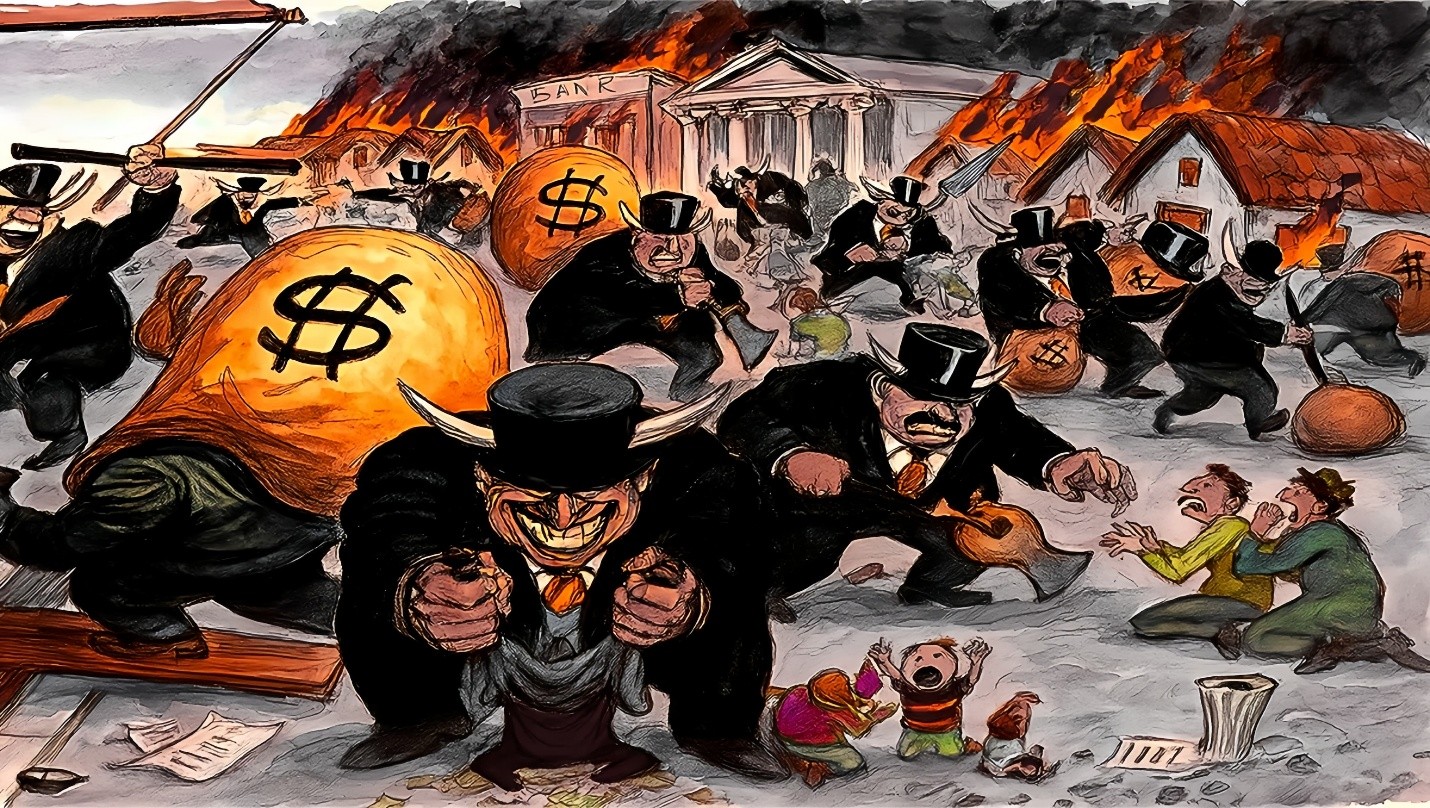
Why Power-Hungry Politicians Ruin Everything: It All Starts With Fear
Mohsin Shah
Power, when haunted by the specter of loss, curdles into something monstrous. Beneath every embezzled dollar, rigged election, or silenced dissident lies a primal terror: What if I fall? Fear of irrelevance drives leaders to clutch power like a lifeline, even as their grip strangles the very people they swore to protect. From Myanmar’s junta bombing its own villages to lobbyists in polished democracies gutting healthcare for profit, the playbook is the same sacrifice humanity to feed the hunger for control. A politician, whether draped in military uniform or designer suits, often becomes a mirror of this fear, their choices shaped more by survival instinct than moral compass. Corruption isn’t just greed; it’s the adrenaline of desperation. And in the end, we all bleed for it. But what if the antidote isn’t courage, but collective refusal to fear them?
Power's Paradox: When Nations Fall Because People Are Afraid of Falling
Have you ever held something so tight that it broke? A fragile heirloom, a relationship, or even your own pride? That’s the irony of power. The more you fear losing it, the more you choke the life out of what made it meaningful. Nations aren’t built by stone or soldiers; they’re held together by stories, trust, and the quiet hum of people believing in tomorrow. But when a politician panics when they start seeing shadows as enemies and truth as rebellion they unravel the very fabric they swore to protect.

Lore
Lorem
Let me tell you a story you’ve heard before, but feel in your bones. Picture Rome: sprawling markets, aqueducts humming with water, soldiers marching under sun-bleached banners. Now imagine an emperor, pacing a marble floor, convinced his closest general is plotting against him. So he fires the general. Then the advisor. Then the tax collector who questions his latest vanity project. What’s left? A circle of “yes-men,” roads cracking under neglect, and a populace rolling their eyes as the latest propaganda scroll hits the streets. Rome didn’t collapse because barbarians were stronger; it rotted from the inside, like fruit left too long in the sun. Fear made them small and every insecure politician helped shrink an empire.
This isn’t just ancient history. Think of that manager at work who hoards credit, terrified someone else might shine brighter. Or the parent who suffocates their child with rules, afraid to let them stumble. Power’s paradox is human nature, scaled up to the level of nations. The French king Louis XVI didn’t just become a bad guy overnight. He was afraid of losing his crown, the excitement of the Enlightenment, and the future. So he doubled down on the past. And we know how that ended: a guillotine, a revolution, and a legacy of “too late.”
Here’s the thing we forget: power isn’t a throne. It’s a conversation. It’s the courts, the free press, the kid with a protest sign, the teacher who dares to say, “But what if?” When leaders silence those voices, they’re not proving strength they’re admitting weakness. I once met a journalist from Venezuela who told me, “They took our printing presses, but they couldn’t take our jokes.” Dictators ban satire because laughter is oxygen; it keeps hope alive. But when you criminalize humor, you’re not a lion. You’re a housecat hissing at a vacuum cleaner.
Look at Hungary today. A democracy stripped piece by piece judges replaced, newspapers shuttered, immigrants scapegoated. Why? Because a politician like Viktor Orbán isn’t afraid of invaders. He’s afraid of his own people. Fear turns a politician into a caricature. They build walls, literal and figurative, and call it “greatness.” But walls don’t keep danger out; they trap fear inside.
Yet there’s a flip side to this story. After World War II, Germany stood in rubble and shame. But instead of clinging to myths or silencing the past, they did something radical: they told the truth. Schools taught the horrors of the Holocaust. Leaders knelt at memorials. They handed power back to the people, brick by brick. Today, Germany isn’t perfect, but it’s a testament to humility. A true politician understands that real power isn’t about standing tall it’s about bending, listening, and sometimes stepping aside.
Here’s what the ruins of empires whisper to us: fear is a death spiral. The moment you care more about keeping your chair than feeding your people, you’ve already lost. Power, at its best, is a campfire. It only burns bright when everyone gathers around it, adding their own sticks to the flame. But when you hog the fire, when you punish those who dare to ask for a spark, you’re left alone in the dark, clutching ashes.
So here’s to the leaders brave enough to loosen their grip. To those who know that true strength isn’t in ruling, but in serving. History doesn’t remember the tyrants who clung to power; it pities them. But it celebrates those who gave it away to the dreamers, the dissenters, the ordinary folks who build extraordinary futures. After all, isn’t that the lesson of every bedtime story? The dragon who hoards gold ends up lonely. The ones who share the treasure? They live happily ever after.
Clutching the Throne: How Fear Breeds Corruption, Stupidity, and Suffering
Lore
Lorem
Let me tell you a story you won’t find in old history books. Back in the 1400s in Korea, King Sejo took the throne by force he killed his own nephew, who was just a young king at the time. Fear followed him around like a ghost. He executed scholars, purged allies, and drained the treasury to buy loyalty. His reign? A masterclass in self sabotage. The economy tanked, rebellions simmered, and his legacy was reduced to a single word: usurper. Fear didn’t make him powerful; it made him pathetic. His grip on the throne was so desperate, he never noticed it was cutting off his air just like a modern politician who clings to influence while their country falls apart.
This isn’t ancient drama it’s human nature. Fear of losing power distorts reality. Think of that friend who micromanages a group project into oblivion, or the CEO who silences whistleblowers to protect a crumbling empire. When leaders panic, they surround themselves with sycophants, not truth-tellers. Corruption thrives in this vacuum. Why do dictators build golden palaces while their people starve? Why does a politician take bribes to fund campaigns they’ll cheat to win? Because fear turns power into a drug. A politician under its spell will do anything for one more hit even if it poisons everyone else.
Stupidity follows like a loyal dog. Take the Soviet Union’s Chernobyl disaster. Officials downplayed the nuclear meltdown, refusing to evacuate cities or admit fault. Why? Not malice, but fear of embarrassment, of demotion, of admitting the Soviet machine wasn’t infallible. Their lies irradiated millions. Fear makes leaders allergic to nuance. It’s why they ban books, censor science, and declare war on “woke” boogeymen while real crises burn. Whether it’s a general or a politician, when your only goal is survival, critical thinking is collateral damage.
And oh, the suffering. For every autocrat hoarding vaccines during a pandemic, there’s a mother burying a child. For every regime that jails activists, there’s a generation growing up in silence. I once met a teacher in Myanmar who whispered lessons to students after the junta banned education. “They can take our classrooms,” she said, “but not our curiosity.” Fear-based regimes always underestimate the human spirit and overestimate their own cunning. They build prisons but forget that ideas are bulletproof. No politician, no matter how paranoid, can lock away imagination forever.
Yet here’s the twist: fear is a choice. Compare Sejo’s Korea to Nelson Mandela’s South Africa. Mandela spent 27 years in a cell, yet emerged refusing to cling to bitterness or power. He shared the throne, literally and figuratively, inviting former enemies into government. Did it erase apartheid’s scars? No. But it gave a broken nation a fighting chance. Mandela understood what fearful leaders don’t: power isn’t a throne. It’s a bridge.
History’s greatest tragedies aren’t about evil geniuses. They’re about small, scared people making small, scared choices. The irony? The tighter you grip power, the more it leaks through your fingers. Corruption rots your courts, stupidity drains your coffers, and suffering fuels the very rebellions you feared.
So here’s to the leaders brave enough to loosen their fists. To those who lead not from terror, but trust. To those who know that thrones are temporary, but dignity is eternal. The bird might fly away. But isn’t that the point? Let it go, and you just might earn the loyalty no army can buy not as a tyrant, but as a politician who dared to lead with grace.
After all, the best leaders don’t clutch the throne they build better seats for everyone else.
Fear-Based Beliefs: The Secret Behind Power-Hungry Politics and People’s Suffering
Lore
Lorem
Let’s call fear what it is the original social media algorithm. Long before TikTok, fear was going viral. Take the Salem witch trials. A handful of whispered accusations about “devil worshippers” spiraled into hangings and hysteria. Why? Because fear is sticky. It bypasses logic and hijacks our lizard brains. Politicians know this. They don’t just use fear; they brand it. “Make America Great Again,” “The War on Terror,” “Reds Under the Bed” these aren’t policies. They’re horror stories sold as salvation.
But here’s the dirty secret: fear is a smokescreen for greed. When Brazil’s Bolsonaro raged about “cultural Marxism,” he wasn’t protecting tradition. He was deflecting from Amazon deforestation contracts handed to his cronies. When Hungary’s Orbán demonizes migrants, he’s not safeguarding borders he’s monopolizing power. Fear is the glitter they sprinkle on grift. It’s easier to blame a refugee for your empty fridge than admit your leader sold the grain reserves to line his pockets.
And oh, how we suffer for their stories. Fear makes us stupid. Literally. Studies show terrified people score lower on cognitive tests. We trade vaccines for conspiracy theories, climate action for “hoax” rhetoric, empathy for border walls. There’s farmer in India who voted against healthcare subsidies because a politician convinced him Muslims would “steal” the funds. His daughter died of a preventable fever. Fear didn’t save her. It killed her.
The most tragic part? Fear is a renewable resource. Politicians don’t even need real threats anymore they franchise them. Australia’s “boat people” panic, Russia’s “gay propaganda” laws, America’s “critical race theory” boogeyman… all fictional crises, weaponized to justify real cruelty. Fear-mongers are the ultimate con artists: they pick your pocket while making you thank them for the privilege.
But here’s the twist they never see coming: fear has a half-life. The lies crack. The monsters fade. In 1980s Chile, Pinochet’s regime tortured thousands in the name of “saving the nation from communism.” Yet, decades later, it wasn’t his tanks people remembered it was the grandmothers dancing the cueca alone in plazas, protesting his rule. Their courage outlived his cruelty.
The antidote to fear isn’t fearlessness. It’s focus. When FDR said, “The only thing we have to fear is fear itself,” he wasn’t trying to be dramatic he was just being real. He was issuing a battle plan. To resist fear’s ideology, we must follow the money, question the narrative, and reclaim our imagination. Look at Colombia’s youth, who toppled a corrupt government not with bullets, but viral Instagram dances. Or Iceland, where citizens rewrote their constitution after the 2008 crash by crowdsourcing ideas online. They didn’t wait for heroes. They became them.
Fear’s empire is built on a lie: that we’re weak, and they’re strong. But history’s true lesson is this: the moment we stop applauding their horror stories and start telling our own, the spell breaks. The monsters under the bed? They were never there. The politicians who invented them? They’re the ones who should be afraid.
So let’s leave them a story they’ll dread. One where the villagers stop cowering and start laughing at the wizard behind the curtain.
From Machiavelli to Modernity: Why Power Doesn’t Corrupt Losing Does
Lore
Lorem
Machiavelli gets blamed a lot. Folks dubbed him the “godfather of schemers,” but really, he was just scrambling to survive the wild ride that was Renaissance-era Florence. Picture the 1500s: nobles backstabbed each other over dinner, alliances shifted like the wind, and even popes acted like they were starring in their own gritty medieval drama. That whole “better to be feared than loved” bit? It wasn’t some villain monologue. Think of it more like shouting advice over a hurricane like telling someone to hold on tight to whatever (or whoever) might keep them from getting swept away.
Fast-forward to today. Ever had a boss who micromanaged your stapler usage? Or a friend who panics when their Instagram likes dip? Same animal. Politicians gerrymander districts not because they’re evil geniuses, but because they’re sweating over their next job review. CEOs lay off thousands to juice stock prices? It’s not greed it’s the CFO’s voice in their head hissing, “The board’s coming for you.” Fear of losing power doesn’t just twist morals; it turns grown adults into toddlers who’d rather smash the toy than share it.
Stalin didn’t wake up evil. He woke up scared. Every laugh at a party sounded like plotting. Every sideways glance, a threat. So he purged, imprisoned, rewrote history not because power corrupted him, but because losing it felt like death. Modern autocrats aren’t different. Putin isn’t some Bond villain twirling a mustache. He’s a man so terrified of irrelevance, he’ll jail a poet for a limerick. Weakness, disguised as strength.
But here’s the kicker: power can be a redemption arc. Jacinda Ardern stepping down as New Zealand’s PM? She didn’t slink away ashamed. She said, “I’m human. I’m empty.” And the world loved her more for it. George Washington could’ve been king. Instead, he went home to farm, proving that real power isn’t in the grip it’s in the release. These leaders didn’t cling; they trusted. And in doing so, they turned their legacies into lighthouses, not landfills.
We’ve got it backward. We act like power is a loaded gun, but it’s really a relay race. The problem isn’t the baton it’s the runners who refuse to pass it. Term limits, independent courts, employees unionizing… these aren’t shackles. They’re guardrails against our own panic. When losing power isn’t a funeral, but a flu shot uncomfortable, but necessary we stop making stupid, desperate choices.
Machiavelli’s real lesson wasn’t about manipulation. It was about humility. The humility to say, “This isn’t just about me.” To build a sandcastle knowing the tide will claim it, and still call it beautiful. To lead like you’re planting trees you’ll never sit under.
So here’s to the leaders who loosen their grip. The ones who don’t confuse holding on with holding together. Because in the end, the kid who smashes his Lego tower? He’s the one who misses out on the joy of building something bigger, together. And the rest of us? We’re stuck sweeping up the pieces.
The Rot at the Top: How Fearful Leaders Turn Politics Into a Weapon
Lore
Lorem
History’s darkest chapters often begin not with a bang, but with a whisper the quiet decay of leadership corroded by fear. When those in power govern from a place of insecurity, politics ceases to be a tool for collective progress. Instead, it morphs into a weapon, wielded to divide, manipulate, and control. This transformation is not merely a failure of character; it is a systemic rot that poisons societies from the top down.
Fear can push people to act, but when leaders weaponize it, things get ugly. Think about rulers who spin wild lies to crush opponents, politicians who blame outsiders just to fire up their base, or groups who’d rather cheat the system than earn real trust. It’s like choosing a shortcut to power instead of building something that lasts. These tactics share a common root: terror of losing relevance. Fearful leaders confuse survival with supremacy, conflating their own interests with the nation’s. They trade vision for villainization, scapegoating dissenters as “enemies of the people” and reciting mantras of us-versus-them. In doing so, they reduce citizenship to a binary loyalist or traitor and politics to a war of attrition.
The weaponization of politics thrives on division. By fracturing societal trust, leaders redirect scrutiny from their failures. Hungary’s Viktor Orbán demonizes migrants to consolidate power; Brazil’s Bolsonaro dismisses rainforest protections as “globalist plots.” These strategies are not accidents but blueprints. Fearful leaders exploit crises real or imagined to expand authority, silencing critics under the guise of “security” or “tradition.” They hollow out institutions, replacing judges, journalists, and educators with sycophants. The result? A democracy stripped of its checks, leaving only a hollowed stage for performative tyranny.
The consequences ripple outward. Communities splinter along manufactured fault lines. Debate becomes heresy; compromise, betrayal. Trust in governance evaporates, replaced by apathy or rage. We see it in America’s Capitol riots, India’s sectarian violence, or Myanmar’s military brutality all symptoms of a world where politics is less about building bridges than burning them.
Yet the antidote is neither naivety nor despair. It is courage the kind that rejects fear as a governing principle. Courageous leadership demands accountability, not adulation. It prioritizes dialogue over demagoguery, investing in education, equitable policies, and transparent institutions. Citizens, too, play a role: resisting the seduction of simplistic narratives, holding leaders to their promises, and voting not out of panic but principle.
The rot at the top need not be terminal. History also shows that societies can heal when they replace fear with moral clarity. When power is driven by fear and suspicion, it’s like a trap it starts to crumble on its own. But if leaders lead with empathy instead of pride, everything changes. Politics stops being a tool to attack others and instead becomes a reflection not of our darkest impulses, but of the humanity we all share. The choice, as always, lies in who we elevate and who we refuse to let define us.
In the end, the battle is not between left or right, but between those who wield fear and those who dare to hope. The latter is how we mend the rot one act of courage at a time.
Survival of the Corrupt: When Leaders Choose Power Over People
Lore
Lorem
You’ve seen this movie before. A leader clings to power like a toddler gripping a toy, even as the world burns around them. They lie. They steal. They gaslight. And when the bill comes due, it’s never them who pays it’s the people. This isn’t just politics; it’s a horror story where the monster wears a suit and the victims are us. Corrupt leaders don’t just fail their citizens they weaponize that failure to stay in charge.
Here’s a wild example: Think of a politician so desperate to stay in power, they’d burn the whole system to the ground even if it meant destroying something vital just to avoid hearing “you lost.” Sounds cartoonish, right? But look at Sudan in 2023: as generals fought for control, they cut off aid to starving regions, using hunger as a bargaining chip. Or Myanmar’s junta, blocking COVID vaccines from reaching dissident communities. This isn’t incompetence it’s strategy. When leaders view their own people as collateral, survival isn’t about governing. It’s about arson. Burn enough, and everyone’s too busy scrambling for water to notice who lit the match.
Corruption isn’t just Swiss bank accounts and golden toilets. It’s systemic rot. Think of a school textbook in Nigeria, where officials pocket education funds, leaving kids to learn under leaky roofs with no teachers. Or Russia, where oligarchs privatize national parks while villages drink toxic water. The message is clear: Your suffering is the price of my privilege. And here’s the kicker the worse things get, the easier it is to distract. Blame immigrants. Blame “foreign influencers.” Blame the rain. Just never blame the person steering the ship into the iceberg.
But why do we let them? Because fear works. A Venezuelan mother searching through trash for food isn’t plotting revolution she’s surviving. A Syrian father fleeing bombs isn’t organizing protests he’s praying. Corrupt leaders breed exhaustion. They want you tired, cynical, and convinced that “this is just how things are.” They thrive on our numbness.
Yet here’s the twist: their greatest weakness is also exhaustion. Ours. Because eventually, people stop being afraid. I’ve stood in crowds where tear gas hung thick as fog, and still, voices chanted. I’ve met farmers in Kenya who rebuilt schools after politicians stole the funds. There’s a recklessness in hope that corruption can’t budget for.
So how do we break the cycle? Stop waiting for heroes. Change isn’t a single leader it’s teachers grading papers in blackouts. Nurses smuggling medicine. Rappers turning protest chants into Instagram anthems. It’s ordinary people deciding that loyalty to a nation shouldn’t mean loyalty to its looters.
And let’s stop pretending this is a “global south” problem. Look at the U.S., where lobbyists write laws poisoning entire towns for profit. Or the U.K., where MPs partied with wine while citizens died alone in lockdown. Corruption isn’t cultural it’s cowardice. It’s the choice to value power over people, every time.
But here’s the secret: power is a loan, not a gift. It relies on our belief in its legitimacy. When we stop believing, when we stop obeying, the whole charade crumbles. Zimbabwe’s Mugabe fell. Brazil’s Bolsonaro lost. Even autocrats bleed.
The survival of the corrupt isn’t inevitable it’s a bet they’re making against our courage. So call their bluff. Speak. Share. Remember. Corruption feeds on silence, but truth is a grenade. Pull the pin.
In the end, the question isn’t “Why do leaders sacrifice their people?” It’s “Why do we keep letting them?” The answer decides everything.